Wednesday, 12 October 2022

As Discreet And Unassuming As A Salad

The salad, which was relegated to a less prominent role in past times due to the widespread popularity of weight-watching programs, is gradually making its way to the spotlight in recent years. In point of fact, salad is currently experiencing the same level of popularity as pizza (well, maybe not pizza, but at least fast food).

Every month, it seems like new approaches to dieting and working out are being introduced somewhere else. From the crash diet to the yo-yo diet to the low-carb high-protein diet to the after six diet to the south beach diet to the even crazier color diet.


The primary difference between the approaches is the make-up of the food that must be taken while on the diet; nevertheless, one thing that is consistent throughout all of these approaches is the consumption of salad in one form or another.


As people become more aware of the importance of maintaining a healthy lifestyle, even the most basic of salads are making their way into fast food restaurants. Even the king of fast food, McDonald's, has been forced to give in to the pressure and has begun to offer healthier choices, including, yes, you guessed it, salads.


It is possible to make a salad in more than a thousand different ways. This recipe so versatile that it may be used as a starter, a main meal, a dessert, or even as a filler for a sandwich. Even while it is most commonly associated with high-nutrient foods like lettuce, romaine lettuce, tomatoes, carrots, cucumbers, and grapes, salad can also take the form of a more substantial meal.


Pork, turkey, and even Peking duck are making their way into bowls all over the place. Chicken and tuna remain the most popular options, but these other meats are making their way in as well.


The phrase "salad" typically refers to a dish that is prepared with items that have been chopped and/or sliced. Even if it is possible to have meat in it, it must contain at least one or two different kinds of vegetables and fruits. It is also possible to serve it with a dressing on the side.


Dressings such as whipped cream, vinaigrette, thousand island, honey-mustard, and caesars' dressing are among the most often used. And the ingredients that are used most frequently include iceberg lettuce, tomatoes, carrots, and cucumbers. Eggs have also established themselves as a staple ingredient.


The salad's increased popularity can be attributed, in large part, to the positive impact it has on one's health. It satisfies the cravings for food without adding too much to the total number on the scale. Because of this, many people who are concerned with their health have started to embrace this method of preparation.


To be perfectly honest, having an interest in one's physical well-being is not required in order to take pleasure in the consumption of this dish. Because of the wide variety of flavors and fascinating textures that are introduced each time, everyone is certain to find at least one that they become addicted to.


As Discreet And Unassuming As A Salad

The salad, which was relegated to a less prominent role in past times due to the widespread popularity of weight-watching programs, is gradually making its way to the spotlight in recent years. In point of fact, salad is currently experiencing the same level of popularity as pizza (well, maybe not pizza, but at least fast food).

Every month, it seems like new approaches to dieting and working out are being introduced somewhere else. From the crash diet to the yo-yo diet to the low-carb high-protein diet to the after six diet to the south beach diet to the even crazier color diet.


The primary difference between the approaches is the make-up of the food that must be taken while on the diet; nevertheless, one thing that is consistent throughout all of these approaches is the consumption of salad in one form or another.


As people become more aware of the importance of maintaining a healthy lifestyle, even the most basic of salads are making their way into fast food restaurants. Even the king of fast food, McDonald's, has been forced to give in to the pressure and has begun to offer healthier choices, including, yes, you guessed it, salads.


It is possible to make a salad in more than a thousand different ways. This recipe so versatile that it may be used as a starter, a main meal, a dessert, or even as a filler for a sandwich. Even while it is most commonly associated with high-nutrient foods like lettuce, romaine lettuce, tomatoes, carrots, cucumbers, and grapes, salad can also take the form of a more substantial meal.


Pork, turkey, and even Peking duck are making their way into bowls all over the place. Chicken and tuna remain the most popular options, but these other meats are making their way in as well.


The phrase "salad" typically refers to a dish that is prepared with items that have been chopped and/or sliced. Even if it is possible to have meat in it, it must contain at least one or two different kinds of vegetables and fruits. It is also possible to serve it with a dressing on the side.


Dressings such as whipped cream, vinaigrette, thousand island, honey-mustard, and caesars' dressing are among the most often used. And the ingredients that are used most frequently include iceberg lettuce, tomatoes, carrots, and cucumbers. Eggs have also established themselves as a staple ingredient.


The salad's increased popularity can be attributed, in large part, to the positive impact it has on one's health. It satisfies the cravings for food without adding too much to the total number on the scale. Because of this, many people who are concerned with their health have started to embrace this method of preparation.


To be perfectly honest, having an interest in one's physical well-being is not required in order to take pleasure in the consumption of this dish. Because of the wide variety of flavors and fascinating textures that are introduced each time, everyone is certain to find at least one that they become addicted to.


As Discreet And Unassuming As A Salad

The salad, which was relegated to a less prominent role in past times due to the widespread popularity of weight-watching programs, is gradually making its way to the spotlight in recent years. In point of fact, salad is currently experiencing the same level of popularity as pizza (well, maybe not pizza, but at least fast food).


Every month, it seems like new approaches to dieting and working out are being introduced somewhere else. From the crash diet to the yo-yo diet to the low-carb high-protein diet to the after six diet to the south beach diet to the even crazier color diet.


The primary difference between the approaches is the make-up of the food that must be taken while on the diet; nevertheless, one thing that is consistent throughout all of these approaches is the consumption of salad in one form or another.


As people become more aware of the importance of maintaining a healthy lifestyle, even the most basic of salads are making their way into fast food restaurants. Even the king of fast food, McDonald's, has been forced to give in to the pressure and has begun to offer healthier choices, including, yes, you guessed it, salads.


It is possible to make a salad in more than a thousand different ways. This recipe so versatile that it may be used as a starter, a main meal, a dessert, or even as a filler for a sandwich. Even while it is most commonly associated with high-nutrient foods like lettuce, romaine lettuce, tomatoes, carrots, cucumbers, and grapes, salad can also take the form of a more substantial meal.


Pork, turkey, and even Peking duck are making their way into bowls all over the place. Chicken and tuna remain the most popular options, but these other meats are making their way in as well.


The phrase "salad" typically refers to a dish that is prepared with items that have been chopped and/or sliced. Even if it is possible to have meat in it, it must contain at least one or two different kinds of vegetables and fruits. It is also possible to serve it with a dressing on the side.


Dressings such as whipped cream, vinaigrette, thousand island, honey-mustard, and caesars' dressing are among the most often used. And the ingredients that are used most frequently include iceberg lettuce, tomatoes, carrots, and cucumbers. Eggs have also established themselves as a staple ingredient.


The salad's increased popularity can be attributed, in large part, to the positive impact it has on one's health. It satisfies the cravings for food without adding too much to the total number on the scale. Because of this, many people who are concerned with their health have started to embrace this method of preparation.


To be perfectly honest, having an interest in one's physical well-being is not required in order to take pleasure in the consumption of this dish. Because of the wide variety of flavors and fascinating textures that are introduced each time, everyone is certain to find at least one that they become addicted to.


Saturday, 1 October 2022

4 Reasons why you should eat at Greenspot


4 Reasons why you should eat at Greenspot


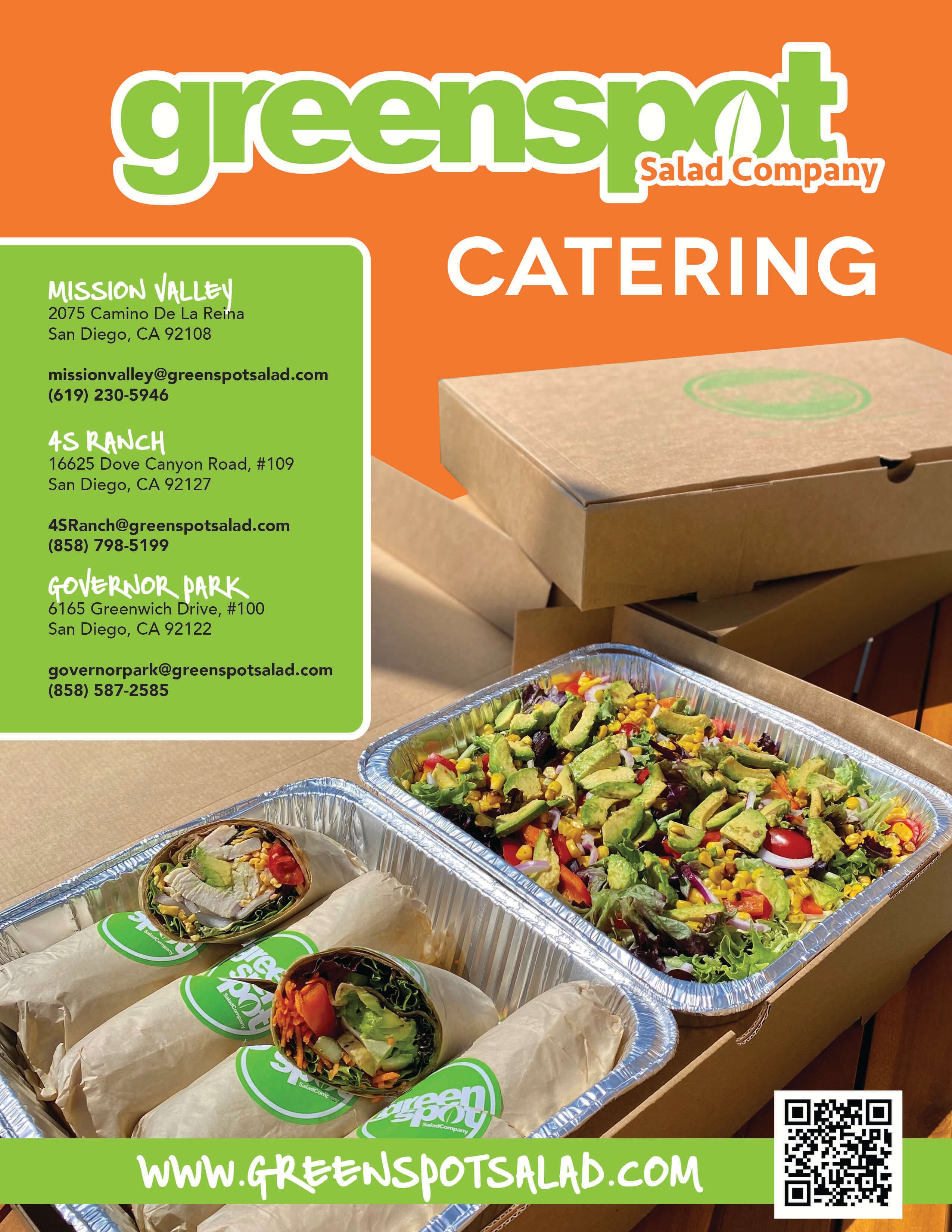
 Hum-drum catering and dining out options for a healthy eater are a thing of yesterday. With Greenspot’s healthy catering and to-go options, you never need to eat a boring meal again. Here are 4 reasons to order from Greenspot today (spoiler alert, you can get $10 off your first order!)

1. Fast, casual, healthy options for to-go, healthy catering, or dining out

Greenspot offers speedy food that isn’t “fast” food. It’s healthy and delicious so you can eat on the go without feeling guilty about stopping at a fast-food joint. With healthy options for dining out or when you’re catering your next office event or party, you can eat healthy, even when you’re eating “fast.”

2. Custom + fresh + Salad

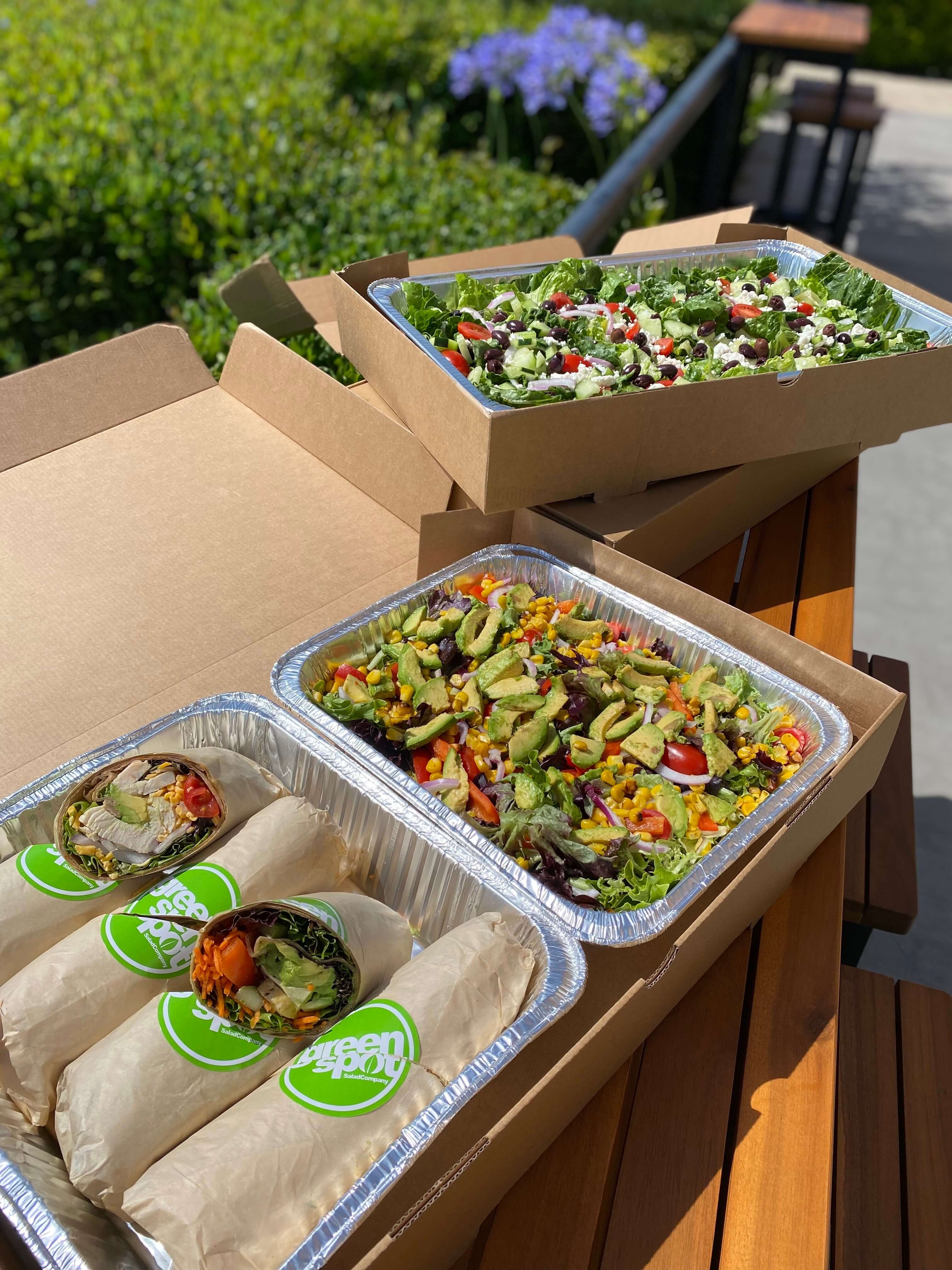
Greenspot’s menu is bursting with flavor and custom options so whether you’re vegan, vegetarian, paleo, or just wanting to add some flavorful health food, you’re covered. Try our salads, wraps, or bowls of your own creation.

Vegetarian Catering

Our superfood salad, for instance, can be custom made with more than 5 types of greens, and over 30 other ingredients ranging from avocado, quinoa, green onion, toasted sesame seeds, roasted sweet potato, cilantro, peppers, mushrooms, apples, cranberries, cucumber broccoli, and more.

3. Convenient

The average American eats out 5.9 times a week. The SAD (standard American diet) also tends toward foods full of trans fats, sugar, and other stuff that has zero to little nutrient content. You don’t have to give up the convenience of eating out when you want to eat healthy. Greenspot’s menu is overflowing with nutrient dense foods that add to your health, energy levels, and mental clarity, instead of sending you into a food coma.

Sure, you could order uber eats from the same old spot, but why not try healthy eating and tasty options from Greenspot instead? Whether you just want a quick, to-go dinner for the family or you want to cater your next ten-person get-together, Greenspot offers options you don’t have to feel guilty about. 

Vegetarian Catering

4. 3 locations (save $10 when you order online or via our Greenspot app!)

Greenspot has 3 convenient locations: Mission Valley, 4S Ranch, Governor Park, so whether you just finished a round of golf or a day of kayaking in La Jolla Sea Cave in San Diego, your north of downtown and feeling hungry, or you’re playing tourist at the Governor’s palace, you don’t need to go hungry. And for a limited time, when you download the Grneespot app and order from it, you can get $10 off your order. There’s no better time to eat healthy and fresh. Order from your favorite location today.  Get the Greenspot app here.

The post 4 Reasons why you should eat at Greenspot appeared first on Green Spot Salad Company.


from Green Spot Salad Company https://www.greenspotsalad.com/uncategorized/4-reasons-why-you-should-eat-at-greenspot/
via IFTTT

Friday, 9 September 2022

Is it true that eating vegetarian fast food is healthy for you?

Diets that are predominantly composed of plant foods have been linked to numerous health benefits, including a lower incidence of obesity, cardiovascular disease, and type 2 diabetes. Therefore, it might seem to make sense to assume that vegetarian fast food, which is by definition based on plants, would be more appealing from a nutritional standpoint than its traditional relatives.


In point of fact, despite the fact that the concept is valid in a great number of circumstances, one cannot rely on it as a fundamental food principle.


"Just because a restaurant or fast food establishment labels a menu item as vegetarian or vegan does not indicate that the item is inherently considered to be 'healthy.' According to registered dietitian and author of "Plant-Powered for Life" Sharon Palmer, "It can have just as many, if not more, calories as non-vegetarian choices, as well as just as much, if not more, saturated fat and sodium."


It makes sense. After all, calories come from the food's components, whether they come from plants or not. And while vegetarian meals may contain greater amounts of fiber and protein due to the abundance of beans, vegetables, and whole grains, they may also contain greater amounts of saturated fat and sodium, depending on the manner in which the food is prepared (for example, whether it is fried or grilled), as well as the amount of cheese and condiments that are included in the meal.


"Vegetarian and vegan food alternatives that are deep-fried, smothered in cheese or creamy sauces, and layered over big servings of fries, rice, wraps, or breads may not be the healthiest option on the menu," said Palmer. "These may not be the healthiest choice on the menu."


For instance, Veggie Grill's Fala-Full sandwich, which consists of two pitas packed with falafel, hummus, pepperoncini, and schug and tzatziki sauces, along with a side of tabbouleh, has a total of 1,100 calories, 10 grams of saturated fat, and more sodium than is recommended for an entire day (2,380 milligrams). When compared to a Big Mac from McDonald's, this item has more than twice as many calories, 2.5 times as much sodium, and the same amount of saturated fat. (One Big Mac comprises 10 grams of saturated fat, 540 calories, and 950 milligrams of salt.)


On the other hand, the grilled "chickin'" sandwich available at the Veggie Grill, which is created with protein derived from soybeans, wheat, and peas, only has 530 calories, 900 milligrams of salt, and 3 grams of saturated fat.


The main lesson is that the items on the menu might differ greatly based on the kind and quantity of ingredients that are utilized, and that sauces and deep frying will add more calories, fat, and sodium to the dish.


Speaking of burgers, the Amy Burger served at Amy's Drive Thru, a meat-free fast food restaurant owned by the same company that produces Amy's vegetarian supermarket foods on a national scale, consists of two veggie patties topped with cheese and sauce. Amy's Drive Thru has aspirations to expand to other markets. The burger has a total of 1,420 milligrams of sodium, 10 grams of saturated fat, 33 grams of protein, and 9 grams of fiber. It has a calorie count of 770. Both the Beyond Burger from Veggie Grill and Amy's have the same amount of total fat and sodium, however the Beyond Burger from Veggie Grill has 13 grams more saturated fat.


Surprisingly, the Big Mac from McDonald's has fewer calories and less salt than both of the veggie burgers, and it has less saturated fat than the single-patty vegetable burger from Veggie Grill. Both of these facts are true (10 grams).


However, Amy's veggie burger has more protein than Mickey D's Big Mac does, and both of these factors can contribute to a feeling of fullness in the body. In addition, not only are Amy's components vegetarian, but they are also locally produced and organic. These factors, taken together, may be more significant than the nutritional information provided, particularly for individuals who are not required to keep track of such information.


Another example is Veggie Grill's Mondo Nachos, which contain more than 900 calories, 7 grams of saturated fat, and approximately 1,600 mg of sodium. They are created with "chickin'" and "queso chorizo" sauce. When compared, Taco Bell's BellGrande nachos with beef contain less calories (760), a somewhat lower amount of saturated fat (6 grams), and a lower total amount of sodium (1,290 milligrams). However, the Grill's has a higher concentration of protein and fiber once again.


It is imperative that you keep in mind that not all tacos made with beef are created equal. The queso laden nachos with beef from Del Taco come in first place on our list. Each serving has more than 2,000 milligrams of sodium, an entire day's worth of saturated fat, and more than 1,000 calories.


When it comes to mac and cheese, the vegan versions offered by Amy's Drive-Thru and Veggie Grill both have significantly less sodium, more fiber, and a great deal less saturated fat than the standard little portion offered by Panera; but, Panera's version contains a great deal more protein.


It is difficult to make broad generalizations about salads since, similar to the other items on the menu, the nutritional contributions of salads are a direct reflection of the foods that are utilized. For instance, Veggie Grill's All Hail Kale salad and Amy's Super Salad with tofu, hummus, quinoa, and roasted pumpkin seeds are nutritional champions; however, a salad from Veggie Grill that has falafel is likely to have significantly more calories, sodium, and fat.


On the other hand, this is the main takeaway message for all of the products on the menu, regardless of whether they are vegetarian, vegan, or neither of either. To put it another way, the nutritional value of a dish is directly proportional to the components that compose it.


Therefore, the labels "vegetarian" or "vegan" placed on a dish do not necessarily indicate that it is the food with the best nutritional profile. Even though French fries can be enjoyed by vegetarians, this does not indicate that you should make them a regular part of your diet.


Palmer suggests searching for options that include a substantial amount of vegetables, such as salads, bowls, or wraps; nutritious grains, such as quinoa or bread made with whole grains; and straightforward protein choices, such as beans or a veggie burger patty. In addition, she recommends "going easy on sauces, creams, and cheeses," which is sound advice for maintaining excellent health regardless of whether or not you follow a vegetarian diet.



Is it true that eating vegetarian fast food is healthy for you?

Diets that are predominantly composed of plant foods have been linked to numerous health benefits, including a lower incidence of obesity, cardiovascular disease, and type 2 diabetes. Therefore, it might seem to make sense to assume that vegetarian fast food, which is by definition based on plants, would be more appealing from a nutritional standpoint than its traditional relatives.


In point of fact, despite the fact that the concept is valid in a great number of circumstances, one cannot rely on it as a fundamental food principle.


"Just because a restaurant or fast food establishment labels a menu item as vegetarian or vegan does not indicate that the item is inherently considered to be 'healthy.' According to registered dietitian and author of "Plant-Powered for Life" Sharon Palmer, "It can have just as many, if not more, calories as non-vegetarian choices, as well as just as much, if not more, saturated fat and sodium."


It makes sense. After all, calories come from the food's components, whether they come from plants or not. And while vegetarian meals may contain greater amounts of fiber and protein due to the abundance of beans, vegetables, and whole grains, they may also contain greater amounts of saturated fat and sodium, depending on the manner in which the food is prepared (for example, whether it is fried or grilled), as well as the amount of cheese and condiments that are included in the meal.


"Vegetarian and vegan food alternatives that are deep-fried, smothered in cheese or creamy sauces, and layered over big servings of fries, rice, wraps, or breads may not be the healthiest option on the menu," said Palmer. "These may not be the healthiest choice on the menu."


For instance, Veggie Grill's Fala-Full sandwich, which consists of two pitas packed with falafel, hummus, pepperoncini, and schug and tzatziki sauces, along with a side of tabbouleh, has a total of 1,100 calories, 10 grams of saturated fat, and more sodium than is recommended for an entire day (2,380 milligrams). When compared to a Big Mac from McDonald's, this item has more than twice as many calories, 2.5 times as much sodium, and the same amount of saturated fat. (One Big Mac comprises 10 grams of saturated fat, 540 calories, and 950 milligrams of salt.)


On the other hand, the grilled "chickin'" sandwich available at the Veggie Grill, which is created with protein derived from soybeans, wheat, and peas, only has 530 calories, 900 milligrams of salt, and 3 grams of saturated fat.


The main lesson is that the items on the menu might differ greatly based on the kind and quantity of ingredients that are utilized, and that sauces and deep frying will add more calories, fat, and sodium to the dish.


Speaking of burgers, the Amy Burger served at Amy's Drive Thru, a meat-free fast food restaurant owned by the same company that produces Amy's vegetarian supermarket foods on a national scale, consists of two veggie patties topped with cheese and sauce. Amy's Drive Thru has aspirations to expand to other markets. The burger has a total of 1,420 milligrams of sodium, 10 grams of saturated fat, 33 grams of protein, and 9 grams of fiber. It has a calorie count of 770. Both the Beyond Burger from Veggie Grill and Amy's have the same amount of total fat and sodium, however the Beyond Burger from Veggie Grill has 13 grams more saturated fat.


Surprisingly, the Big Mac from McDonald's has fewer calories and less salt than both of the veggie burgers, and it has less saturated fat than the single-patty vegetable burger from Veggie Grill. Both of these facts are true (10 grams).


However, Amy's veggie burger has more protein than Mickey D's Big Mac does, and both of these factors can contribute to a feeling of fullness in the body. In addition, not only are Amy's components vegetarian, but they are also locally produced and organic. These factors, taken together, may be more significant than the nutritional information provided, particularly for individuals who are not required to keep track of such information.


Another example is Veggie Grill's Mondo Nachos, which contain more than 900 calories, 7 grams of saturated fat, and approximately 1,600 mg of sodium. They are created with "chickin'" and "queso chorizo" sauce. When compared, Taco Bell's BellGrande nachos with beef contain less calories (760), a somewhat lower amount of saturated fat (6 grams), and a lower total amount of sodium (1,290 milligrams). However, the Grill's has a higher concentration of protein and fiber once again.


It is imperative that you keep in mind that not all tacos made with beef are created equal. The queso laden nachos with beef from Del Taco come in first place on our list. Each serving has more than 2,000 milligrams of sodium, an entire day's worth of saturated fat, and more than 1,000 calories.


When it comes to mac and cheese, the vegan versions offered by Amy's Drive-Thru and Veggie Grill both have significantly less sodium, more fiber, and a great deal less saturated fat than the standard little portion offered by Panera; but, Panera's version contains a great deal more protein.


It is difficult to make broad generalizations about salads since, similar to the other items on the menu, the nutritional contributions of salads are a direct reflection of the foods that are utilized. For instance, Veggie Grill's All Hail Kale salad and Amy's Super Salad with tofu, hummus, quinoa, and roasted pumpkin seeds are nutritional champions; however, a salad from Veggie Grill that has falafel is likely to have significantly more calories, sodium, and fat.


On the other hand, this is the main takeaway message for all of the products on the menu, regardless of whether they are vegetarian, vegan, or neither of either. To put it another way, the nutritional value of a dish is directly proportional to the components that compose it.


Therefore, the labels "vegetarian" or "vegan" placed on a dish do not necessarily indicate that it is the food with the best nutritional profile. Even though French fries can be enjoyed by vegetarians, this does not indicate that you should make them a regular part of your diet.


Palmer suggests searching for options that include a substantial amount of vegetables, such as salads, bowls, or wraps; nutritious grains, such as quinoa or bread made with whole grains; and straightforward protein choices, such as beans or a veggie burger patty. In addition, she recommends "going easy on sauces, creams, and cheeses," which is sound advice for maintaining excellent health regardless of whether or not you follow a vegetarian diet.


Is it true that eating vegetarian fast food is healthy for you?

Diets that are predominantly composed of plant foods have been linked to numerous health benefits, including a lower incidence of obesity, cardiovascular disease, and type 2 diabetes. Therefore, it might seem to make sense to assume that vegetarian fast food, which is by definition based on plants, would be more appealing from a nutritional standpoint than its traditional relatives.


In point of fact, despite the fact that the concept is valid in a great number of circumstances, one cannot rely on it as a fundamental food principle.


"Just because a restaurant or fast food establishment labels a menu item as vegetarian or vegan does not indicate that the item is inherently considered to be 'healthy.' According to registered dietitian and author of "Plant-Powered for Life" Sharon Palmer, "It can have just as many, if not more, calories as non-vegetarian choices, as well as just as much, if not more, saturated fat and sodium."


It makes sense. After all, calories come from the food's components, whether they come from plants or not. And while vegetarian meals may contain greater amounts of fiber and protein due to the abundance of beans, vegetables, and whole grains, they may also contain greater amounts of saturated fat and sodium, depending on the manner in which the food is prepared (for example, whether it is fried or grilled), as well as the amount of cheese and condiments that are included in the meal.


"Vegetarian and vegan food alternatives that are deep-fried, smothered in cheese or creamy sauces, and layered over big servings of fries, rice, wraps, or breads may not be the healthiest option on the menu," said Palmer. "These may not be the healthiest choice on the menu."


For instance, Veggie Grill's Fala-Full sandwich, which consists of two pitas packed with falafel, hummus, pepperoncini, and schug and tzatziki sauces, along with a side of tabbouleh, has a total of 1,100 calories, 10 grams of saturated fat, and more sodium than is recommended for an entire day (2,380 milligrams). When compared to a Big Mac from McDonald's, this item has more than twice as many calories, 2.5 times as much sodium, and the same amount of saturated fat. (One Big Mac comprises 10 grams of saturated fat, 540 calories, and 950 milligrams of salt.)


On the other hand, the grilled "chickin'" sandwich available at the Veggie Grill, which is created with protein derived from soybeans, wheat, and peas, only has 530 calories, 900 milligrams of salt, and 3 grams of saturated fat.


The main lesson is that the items on the menu might differ greatly based on the kind and quantity of ingredients that are utilized, and that sauces and deep frying will add more calories, fat, and sodium to the dish.


Speaking of burgers, the Amy Burger served at Amy's Drive Thru, a meat-free fast food restaurant owned by the same company that produces Amy's vegetarian supermarket foods on a national scale, consists of two veggie patties topped with cheese and sauce. Amy's Drive Thru has aspirations to expand to other markets. The burger has a total of 1,420 milligrams of sodium, 10 grams of saturated fat, 33 grams of protein, and 9 grams of fiber. It has a calorie count of 770. Both the Beyond Burger from Veggie Grill and Amy's have the same amount of total fat and sodium, however the Beyond Burger from Veggie Grill has 13 grams more saturated fat.


Surprisingly, the Big Mac from McDonald's has fewer calories and less salt than both of the veggie burgers, and it has less saturated fat than the single-patty vegetable burger from Veggie Grill. Both of these facts are true (10 grams).


However, Amy's veggie burger has more protein than Mickey D's Big Mac does, and both of these factors can contribute to a feeling of fullness in the body. In addition, not only are Amy's components vegetarian, but they are also locally produced and organic. These factors, taken together, may be more significant than the nutritional information provided, particularly for individuals who are not required to keep track of such information.


Another example is Veggie Grill's Mondo Nachos, which contain more than 900 calories, 7 grams of saturated fat, and approximately 1,600 mg of sodium. They are created with "chickin'" and "queso chorizo" sauce. When compared, Taco Bell's BellGrande nachos with beef contain less calories (760), a somewhat lower amount of saturated fat (6 grams), and a lower total amount of sodium (1,290 milligrams). However, the Grill's has a higher concentration of protein and fiber once again.


It is imperative that you keep in mind that not all tacos made with beef are created equal. The queso laden nachos with beef from Del Taco come in first place on our list. Each serving has more than 2,000 milligrams of sodium, an entire day's worth of saturated fat, and more than 1,000 calories.


When it comes to mac and cheese, the vegan versions offered by Amy's Drive-Thru and Veggie Grill both have significantly less sodium, more fiber, and a great deal less saturated fat than the standard little portion offered by Panera; but, Panera's version contains a great deal more protein.


It is difficult to make broad generalizations about salads since, similar to the other items on the menu, the nutritional contributions of salads are a direct reflection of the foods that are utilized. For instance, Veggie Grill's All Hail Kale salad and Amy's Super Salad with tofu, hummus, quinoa, and roasted pumpkin seeds are nutritional champions; however, a salad from Veggie Grill that has falafel is likely to have significantly more calories, sodium, and fat.


On the other hand, this is the main takeaway message for all of the products on the menu, regardless of whether they are vegetarian, vegan, or neither of either. To put it another way, the nutritional value of a dish is directly proportional to the components that compose it.


Therefore, the labels "vegetarian" or "vegan" placed on a dish do not necessarily indicate that it is the food with the best nutritional profile. Even though French fries can be enjoyed by vegetarians, this does not indicate that you should make them a regular part of your diet.


Palmer suggests searching for options that include a substantial amount of vegetables, such as salads, bowls, or wraps; nutritious grains, such as quinoa or bread made with whole grains; and straightforward protein choices, such as beans or a veggie burger patty. In addition, she recommends "going easy on sauces, creams, and cheeses," which is sound advice for maintaining excellent health regardless of whether or not you follow a vegetarian diet.


As Discreet And Unassuming As A Salad

The salad, which was relegated to a less prominent role in past times due to the widespread popularity of weight-watching programs, is gradu...